
Innovative Design
Bring complex optical paths back inside the chip
Reduces the number of precision spectral components, simplifies optical-path design and supports accurate spectral-data acquisition.

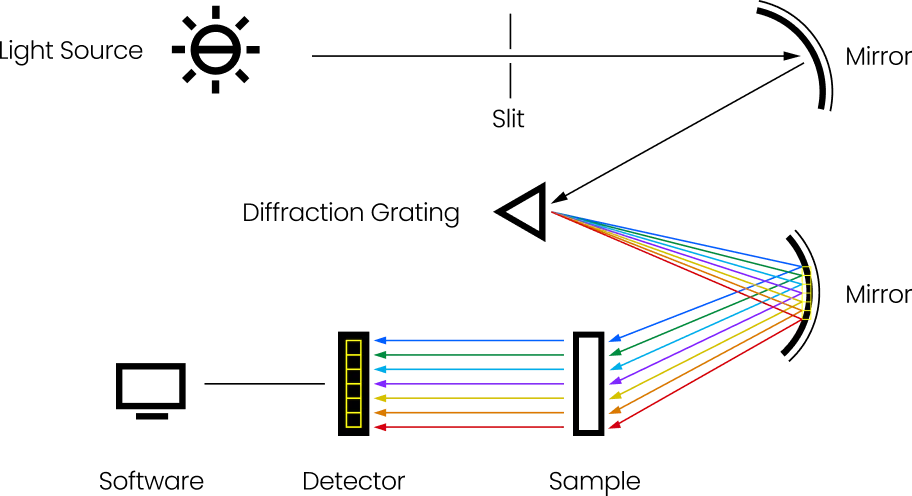
Chip & Intelligent Platform
A spectral chip measures how a sample interacts with light. The VISPEK AI Platform helps turn that data into models for your material and measurement task.
Core Technology Loop
Spectral Analysis Instruments
Powered by proprietary spectral chips
Data Acquisition
On-site / online / embedded

Data Upload
VISPEK mobile app
Analysis & Modelling
VISPEK AI Platform
Application Models
Spectral-analysis application models
Model Application
Back to the device and operational workflow
NT-series miniature full-spectrum sensing chips
The NT-series chip captures spectral information across ultraviolet, visible and near-infrared light. Instruments and application models use that information for specific measurement tasks.
Innovative Design
Reduces the number of precision spectral components, simplifies optical-path design and supports accurate spectral-data acquisition.
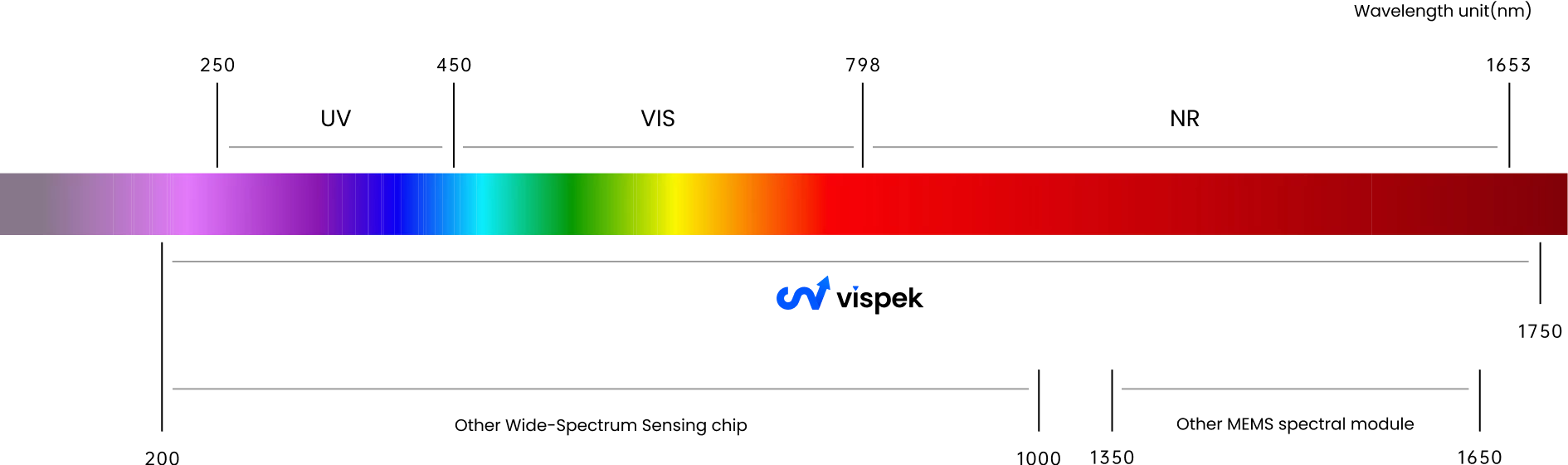
High-sensitivity Sensing
Built on proprietary optical materials to deliver full-spectrum sensing from ultraviolet and visible light to near infrared.
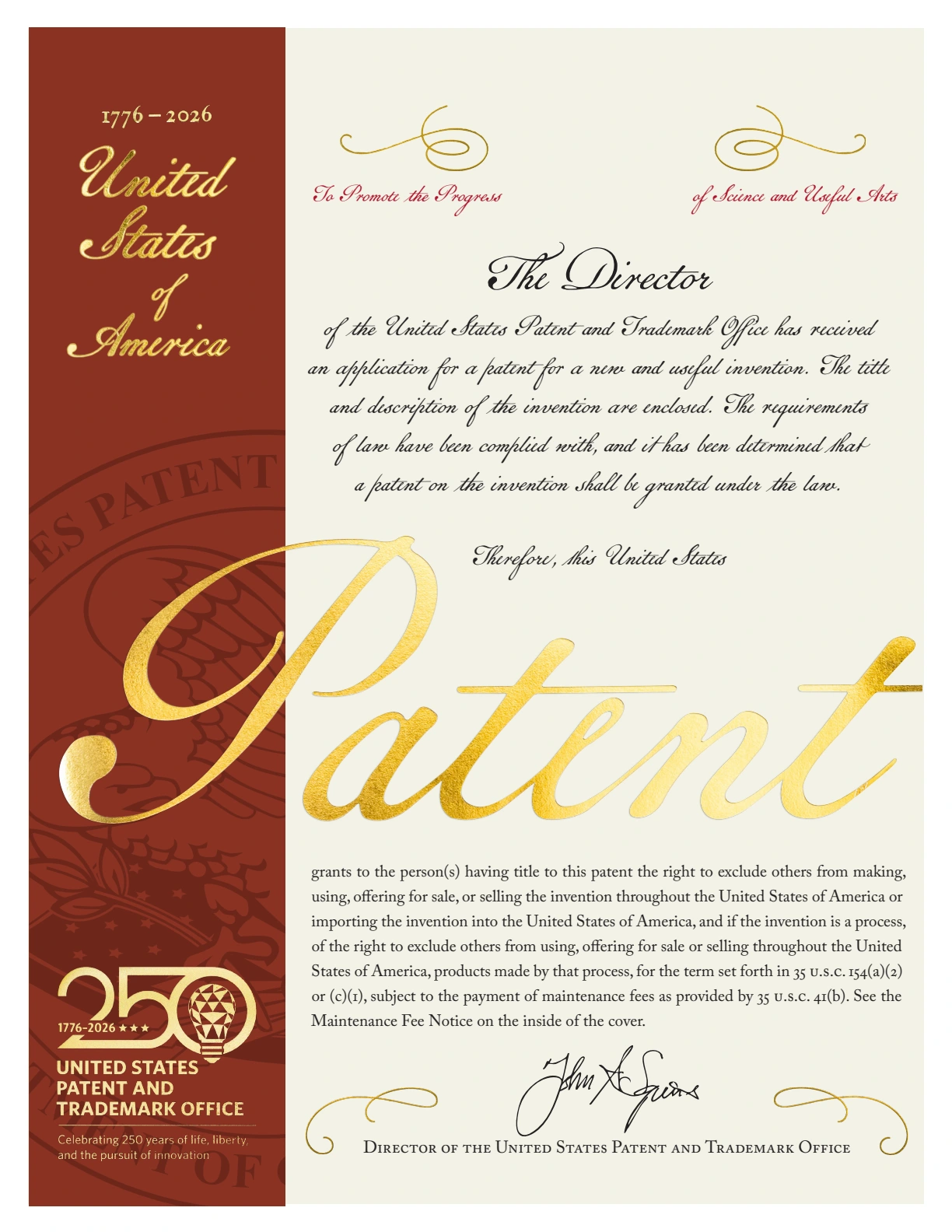 Enlarge patent image
Intellectual property · U.S. patent
VISPEK has been granted a U.S. patent for on-chip ultraviolet, visible and near-infrared spectral sensing. The technology integrates emitters across multiple wavelength bands and detection elements in a compact sensor architecture, providing a foundation for miniaturized spectral sensing.
VISPEK AI Platform
A unified workspace for spectral developers to acquire, clean and visualise data, then train and deploy models. Its no-code workflow lowers the programming barrier for building spectral-analysis models.
No-code Development : Build spectral-analysis models without writing code
Multiple core algorithms : Built-in mainstream algorithms for varied modelling needs
Custom interface integration : Provides interfaces for system integration and efficient custom development
Data Acquisition : Connect instruments and organise samples by dataset
Data Cleaning : Denoise data and remove anomalous samples
Data Visualisation : Review spectral curves and label distributions
Model Training : Select a built-in algorithm and train an analysis model
Model Deployment : Deploy to instruments and operational systems
Provide a sample and measurement target; our engineering team will support feasibility validation and model evaluation.
FAQ
These answers summarise information already published on this site. Measurement performance on your own samples is confirmed through feasibility testing.
NT-series miniature full-spectrum sensing chips provide 44 channels across 240–1700 nm, spanning ultraviolet, visible and near-infrared light, for solids and liquids alike. The chip has gone through three generations since VISPEK was founded in 2018: NT1000 in 2022, NT2000 iterated and mass-produced in 2023, and the NT2060 / NT2090 series upgraded in 2025.
The NT series brings the complex optical path back inside the chip, reducing the number of precision spectral components and simplifying optical-path design while still supporting accurate spectral-data acquisition. Built on proprietary luminescent materials with the light source, sample interface, detector and software developed in house, the miniaturised, cost-competitive chip can be embedded in portable instruments, online analysers and customer products.
Yes. The on-chip wide UV-VIS-NIR spectral sensor was granted U.S. patent US 12,774,950 B2 on 27 October 2026, assigned to Shenzhen Vispek Tech Co. Ltd.
A no-code modelling workspace for spectral developers that covers data acquisition, data cleaning, data visualisation, model training and model deployment in five steps. It includes multiple built-in mainstream algorithms for varied modelling needs and provides interfaces for system integration and custom development, so building a spectral-analysis model no longer depends on an algorithm engineer.
Spectral instruments built on proprietary chips acquire data on site, online or embedded in equipment. The data is uploaded through the VISPEK mobile app, analysed and modelled on the VISPEK AI Platform to produce a spectral-analysis application model, which is then applied back on the instrument and in the operational workflow.
Let's talk about your application
You don't need a finished specification. Tell us about your sample and the problem you want to solve.
Prefer to contact us directly?
bd@vispek.cnRoom 501, Building K, North Zone, Qianhai Shenzhen-Hong Kong Youth Innovation Hub, 5188 Menghai Avenue, Shenzhen, China